
See you in 2100
The forest we plant today must outlive us all

Dear Morfollower,
The climate of 2100 won’t look like today’s. So what does it mean to plant a forest right now?
It means the species we select today must survive conditions that don’t exist yet. And it means the tools we use to make these decisions need to match the challenge. A few months ago, our research team led by Emira Cherif published FaBRestor, a future-based restoration framework, in Restoration Ecology. Last week, Rebecca Montemagni took it further by publishing a tool she built that projects species suitability under three climate scenarios through 2100. The work was covered by Um Só Planeta, one of Brazil’s leading environmental media platforms.
This precision connects directly to what’s happening in the carbon market. I wrote about it recently: capital is concentrating on projects that can demonstrate this kind of rigor.
See you in 2100 (or maybe much sooner)!
Pascal Asselin, Co-founder & CEO of MORFO
🌡️ Designing forests for a climate that doesn’t exist yet
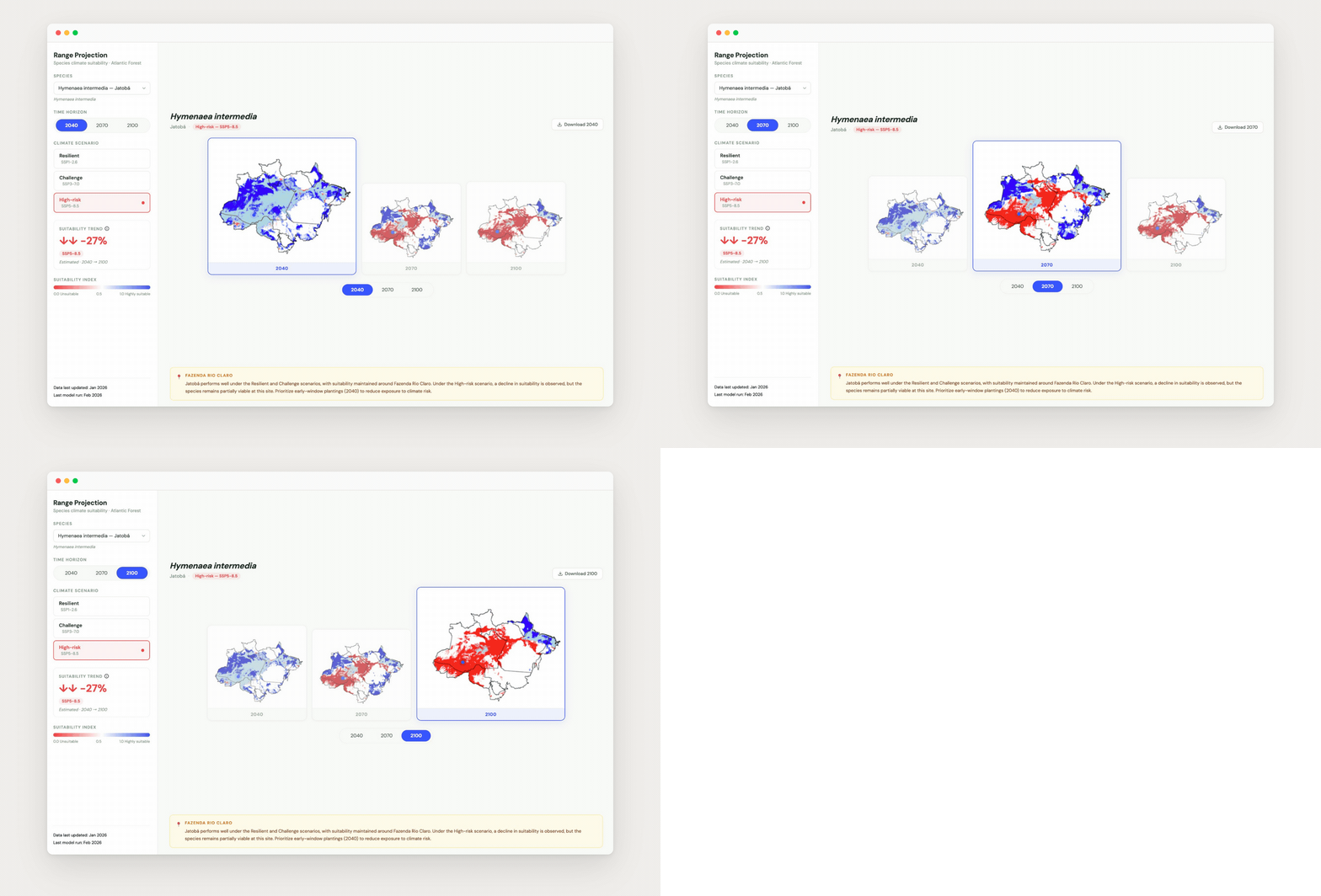
Most restoration projects in Brazil still use what Rebecca Montemagni calls a “receita de bolo” - a cookie-cutter recipe. Same species list, same density, regardless of location or future conditions. A species that thrives in Bahia today may not survive there in 2070.
MORFO’s FaBRestor framework, published in Restoration Ecology, models species suitability under three climate scenarios (Resilient, Challenge, High-risk) at three time horizons: 2040, 2070, and 2100. Rebecca built this into a system that scores every candidate species with a suitability index (0.0 to 1.0) and projects range shifts across Brazil, site by site.
The framework is already informing species selection on MORFO’s restoration projects in the Amazon and Mata Atlântica, where the team uses it to adapt planting lists to each site’s projected future conditions.
📖 Read more: Um Só Planeta | English version
📊 The new rules of ARR project selection
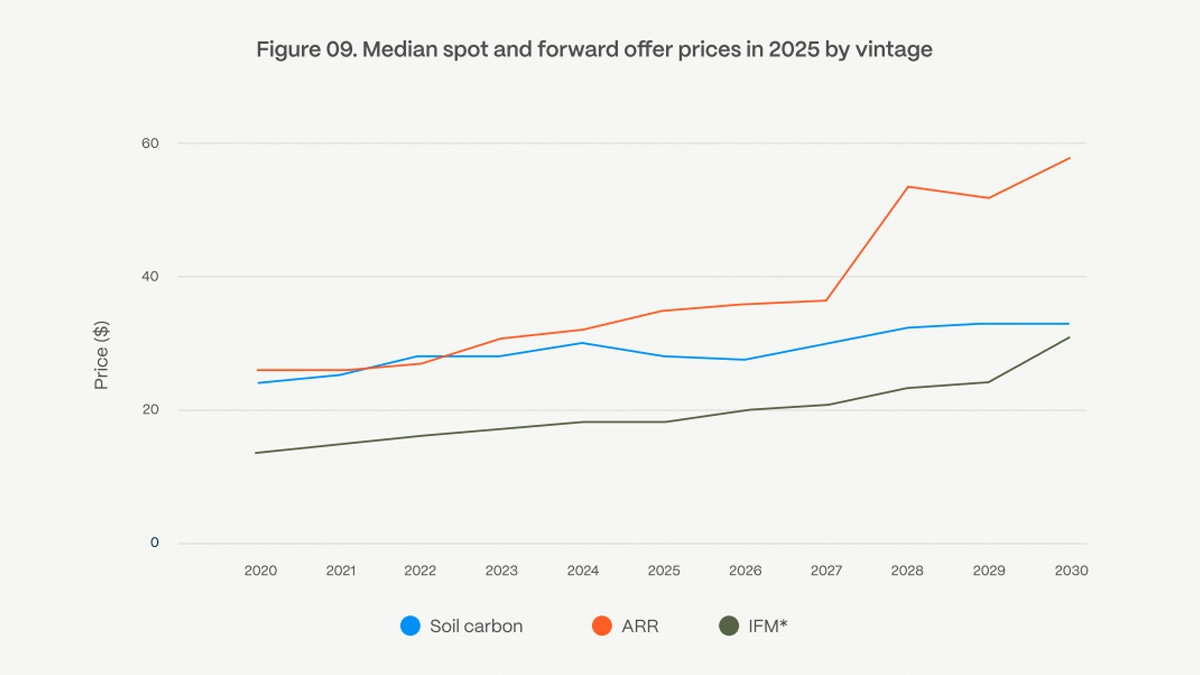
Forward price curves for nature-based removals, including ARR, rise significantly toward 2030
ARR project selection standards keep tightening. We published an analysis on our website breaking down what the Abatable 2026 carbon market outlook means for developers and investors.
The numbers tell the story: NBS funding reached $9 billion in 2025, up from $4 billion just three years earlier. Forward contracts hit $5.8 billion (+58% YoY), a sign that buyers are financing project risk earlier, not just purchasing tonnes after the fact. And with 78 million tonnes of CORSIA demand expected in 2026, compliance is pulling the voluntary market toward higher standards. The market isn’t shrinking - it’s concentrating on fewer, more rigorous projects.
📖 Read the full analysis: New rules of ARR project selection in 2026
🤝 Scaling restoration with Suzano: field exchange
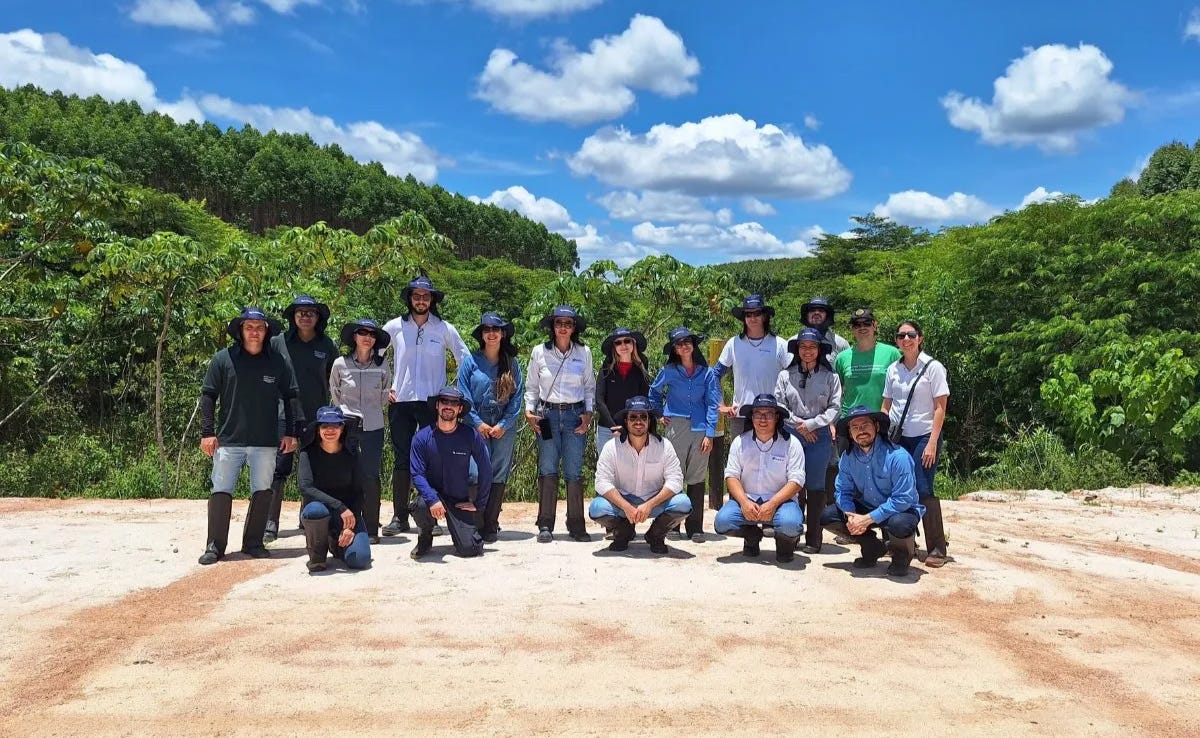
In February, Pierre-Jean Quetant and Pedro Bevilaqua represented MORFO in a two-day exchange with Suzano’s restoration teams - office and field, across projects in Espírito Santo and Bahia.
Both teams discussed what works, what doesn’t, and the operational bottlenecks that come with daily execution. No conference, no showcase - a 2-day working session and field visits on what actually happens when you restore biodiverse forests at scale.
One conclusion stood out: scaling forest restoration requires becoming more precise, not just bigger. Each hectare responds differently. Soil, rainfall, species dynamics, local context - none of it is uniform. And with growing pressure to deliver more with less capital, the sector’s challenge is learning to restore far more while being far more precise on each site.
Technology helps. Science guides. But open exchange between practitioners is what accelerates.
📖 Read more about the exchange (PT)
📚 You Should Read
If you’re planting forests that need to survive the century:
Could AI unlock finance for nature restoration? - WRI + Meta’s DINOv3 counts trees from satellite imagery. Connects AI-based MRV to the restoration financing gap.
ETH Zurich: Restoring logged forests is harder than expected - Recovery post-logging doesn’t follow the curves models assume.
Functional diversity > species count. What increases ecosystem resistance isn’t species number, but how species function together. The question shifts from “how many?” to “which functions are present?”
Species richness is the #1 predictor of forest drought resilience - Published last week in Nature Ecology & Evolution. 71% of forests lost resilience after severe droughts. The difference? Number of species in the ground. Managed forests with fewer species consistently performed worse.
For carbon market watchers:
Carbon Direct: 2026 State of the VCM - CDR is 6% of the VCM. Retirements fell 7% in 2025. Most orgs with 2030 targets haven’t started procurement.
VCM: issuance surge at start of 2026 - Market gearing up for first wave of CORSIA demand.
Verra’s first ABACUS-labelled ARR credits expected in 2026. Built on VM0047, requires in-situ sampling and biodiversity commitments.
From Brazil:
Sem biodiversidade, não há lucro (did you get it?) - Largest global biodiversity risk report. Systemic risk most companies still ignore. (PT)
Brazil’s seed infrastructure gap. A free USP/Esalq book maps the supply chain challenges behind restoration targets. “We talk about targets. Little about the infrastructure to meet them.” 59 pages, PT only.
🐾 Companion of the month
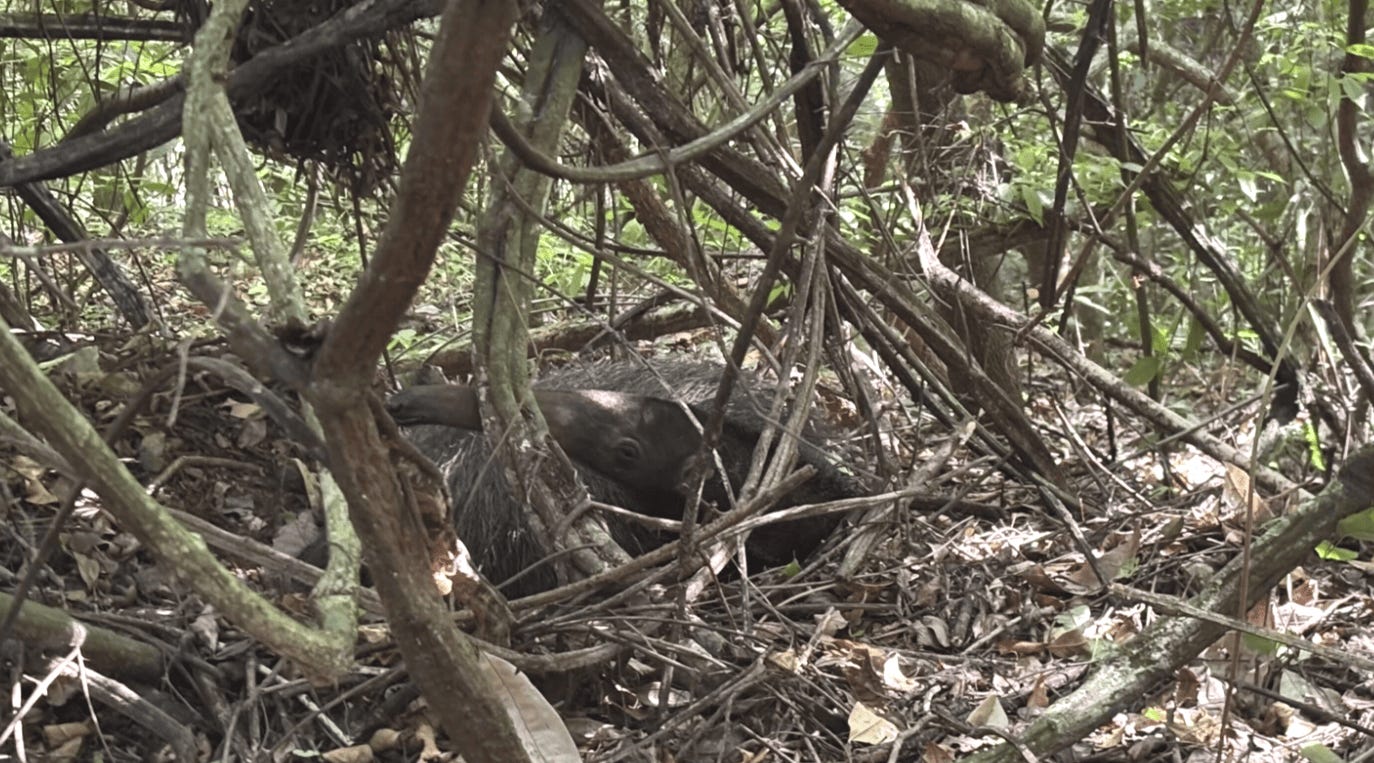
Giant anteater (Myrmecophaga tridactyla) - spotted by our field team in the Amazon. A pregnant female, resting in one of our restoration sites. We recently shared some of these encounters on our Instagram - go take a look!
🌎 Thank you for reading MORFO’s newsletter until the end. If you enjoyed it, please share it with someone who cares about the future of tropical forests.
🇧🇷 Want to read our newsletter in Portuguese? Subscribe here.
To stay connected, click here!