
[Special Edition] Notes from five years restoring forests!
The milestones, the mistakes and what we think comes next

Dear Morfollower,
This Monday, MORFO turned 5.
For this special edition, instead of our usual format, I wanted to share the lessons of these five years, with the help of people who have shaped this journey, inside and outside MORFO.
The why started long before MORFO. Our father was a gold miner, first in Brazil, then in French Guiana. Hugo, my brother, and I grew up on his mining sites, in areas where the activity eventually left behind bare soil. Twenty-five years later, in late 2020, a Christmas conversation brought us back to one question: why weren’t mining sites being properly restored? Pressure was building, regulators were tightening, corporate commitments were multiplying. Yet companies looking for a real answer had nowhere to turn. The work was technical, expensive, slow to mature. No operator was built to deliver it. Five years ago, we registered the papers of MORFO in Paris (Rio came a few months later).
The path wasn’t the one we imagined.
We thought the two questions our clients cared about most were cost and scale. We were wrong. We thought the right planting technique would be enough to scale. It wasn’t. We thought results would speak for themselves. They didn’t, not until we changed what we were measuring.
Along the way, I learned the Brazilian expression arroz com feijão: rice and beans, what you eat every day, basic, reliable, done well. That’s what buyers wanted, and they had good reasons. It took us time to understand why our drone-and-direct-seeding approach, however technically strong, wasn’t giving them the reassurance they needed.
So we changed direction. We went back through every project we had ever run, extracted every piece of usable data, and built predictive models. We came to believe the bottleneck isn’t the technology or the data in themselves, but what they unlock: predictability and commitment. That’s what lets the people writing the checks price what they’re buying and see a return.
That’s why, today, we operate two interlocking business lines:
Restoration Intelligence. Our proprietary models run a satellite pre-analysis, then a field diagnostic (drone and soil) that builds a restoration plan, zone by zone. The result: hundreds of precise decisions per site, cut costs, and a certification-ready evidence package from day one.
Operations. Soil preparation, invasives control, planting design, species mix, maintenance, monitoring, executed layer by layer. On a recent 8,420 ha site in the Atlantic Forest: 7 zones, 132 sub-zones, each with its own mix and pre-activities. Around 16% we chose not to treat, because natural regeneration was already doing the job.
And the most important shift: we don’t sell efforts. We commit to results. Contractual performance guarantees, with unlimited corrective actions until the KPIs are met.
Five years in, the foundations are set. Now we build on them.
A huge thank you to everyone who is part of this mission, who has been, or plans to be. The team, the partners, the clients, the investors, the curious, the people who just follow along, those who helped me write and review this article (summing up five years isn’t easy, trust me).
Let’s grow.
Pascal Asselin, Co-founder of MORFO
The full story is in the article I published this week on LinkedIn: Notes from five years engineering forest restoration.
🛠️ Building MORFO Ri, step by step

MORFO Restoration Intelligence is our internal platform. It uses field data to design planting strategies and track them zone by zone, on every project we run.
Two updates this month.
First, the State of Rio de Janeiro selected our project on geospatial machine learning for native seedling identification and invasive species detection. The non-dilutive funding goes directly into building new features for the platform.
Talking about features, two new features are now live:
A seed inventory system. It follows every seed lot from collection in the forest to plantation in the field. For each lot, we now have quality data by supplier and by batch.
An AI species recognition model. When our team uploads a photo, the model identifies the species. High-confidence predictions are validated automatically. The rest go to manual review.
📌 Last month in brief
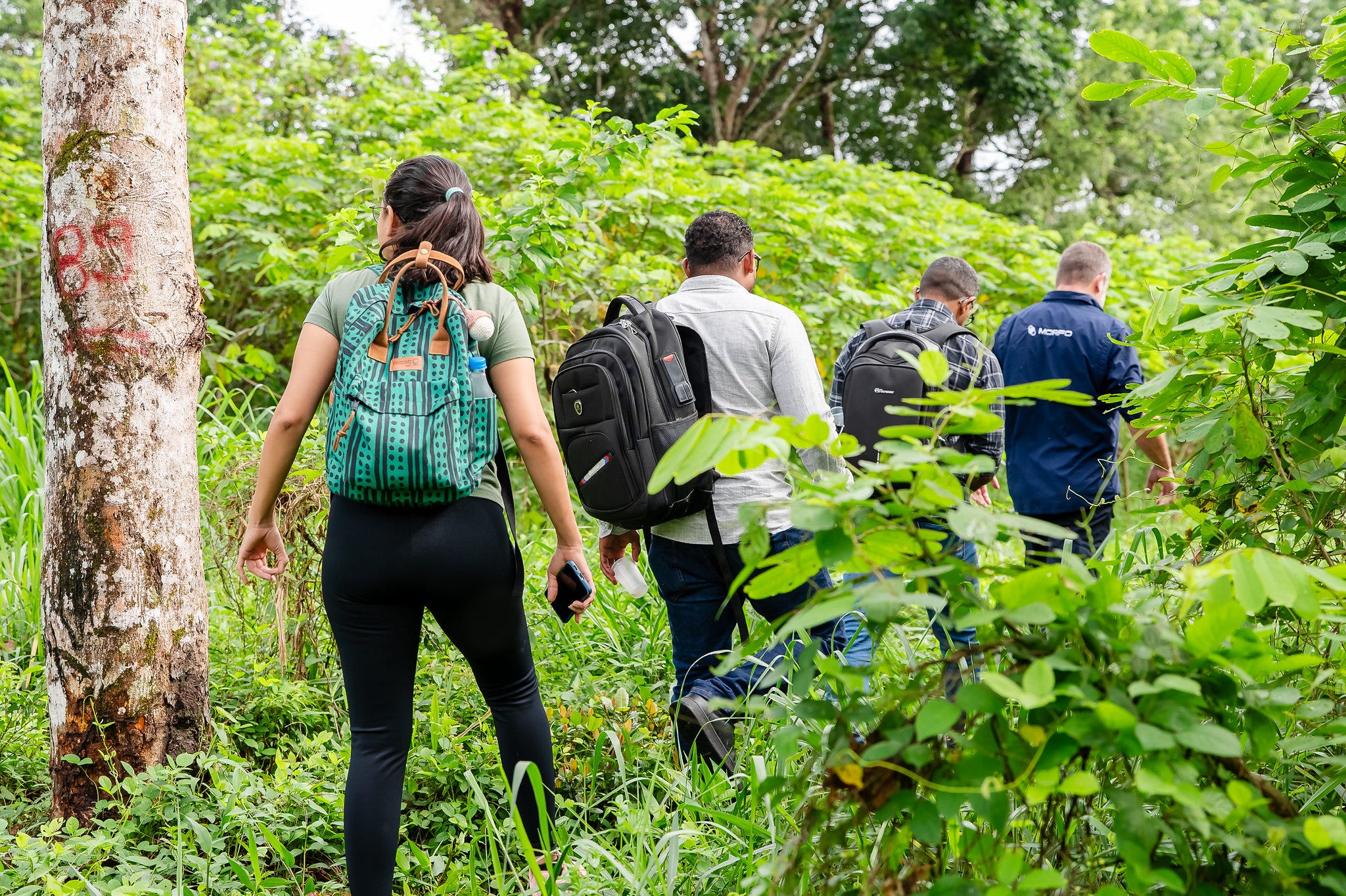
We partnered with the second edition of the BAS (Belém Amazon Summit), an event growing in scope and momentum. Forty people visited one of our sites in the Amazon during the event.
MORFO is now one of the few organizations in Brazil cleared end-to-end on native seeds. We’re 100% accredited by the Brazilian Ministry of Agriculture and Livestock (MAPA) to handle native forest seeds across the entire value chain, from collection to commercialization.
Zé da Lena on Globo Repórter. One of our first seed suppliers was featured on national TV in May. A reminder of how much restoration depends on the people collecting seeds in the forest, often without much visibility. Read the recap (in Portuguese)
🔍 We recommend reading…
On the Amazon, scientifically
A new Nature paper (Wunderling et al., May 2026) refines when and how the Amazon could cross its tipping point: deforestation above 22-28%, combined with 1.5-1.9°C of warming, would be enough. Read on Nature
WRI’s Global Forest Watch released the 2025 data: tropical primary forest loss fell 36% in 2025, still 46% above a decade ago, and fires drove 38% of the loss. Read on WRI
Where the capital is flowing
BTG Pactual TIG closed the largest reforestation fund ever at US$1.24 billion, and issued the first VM0047 credits from its Cerrado 1 project. A signal worth tracking. Read on TIG
Brazil awarded its first public Amazon reforestation concession to Re.green: 59,000 hectares in Bom Futuro National Forest over 40 years, with 0.7% revenue share to the State. Read on Carbon Herald
On methodology and monitoring
Google DeepMind, WRI and IIASA released the first global Forest Typology map at 10-meter resolution, with 90.2% overall accuracy. Useful for EUDR compliance, 30x30 conservation, TFFF and credible carbon accounting. Explore the map
A new paper on Brazil seed transfer zones, supporting seed sourcing for climate-resilient ecosystem restoration. Written by friends. Highly recommended. Read on ResearchGate
💼 Open jobs alert
A few roles in the broader restoration and nature finance space:
Living Carbon is hiring a Project Development Manager (US, remote). Apply
Terra Global Capital is hiring a Nature-Based Solutions Investments Portfolio Manager (remote). Apply
Equitable Earth is hiring a Data Team Lead (Forest Engineers + Geospatial, remote, anywhere). Apply
Spotted another role worth sharing? Reply to this email and we’ll feature it next time.
🐜 Companion of the month
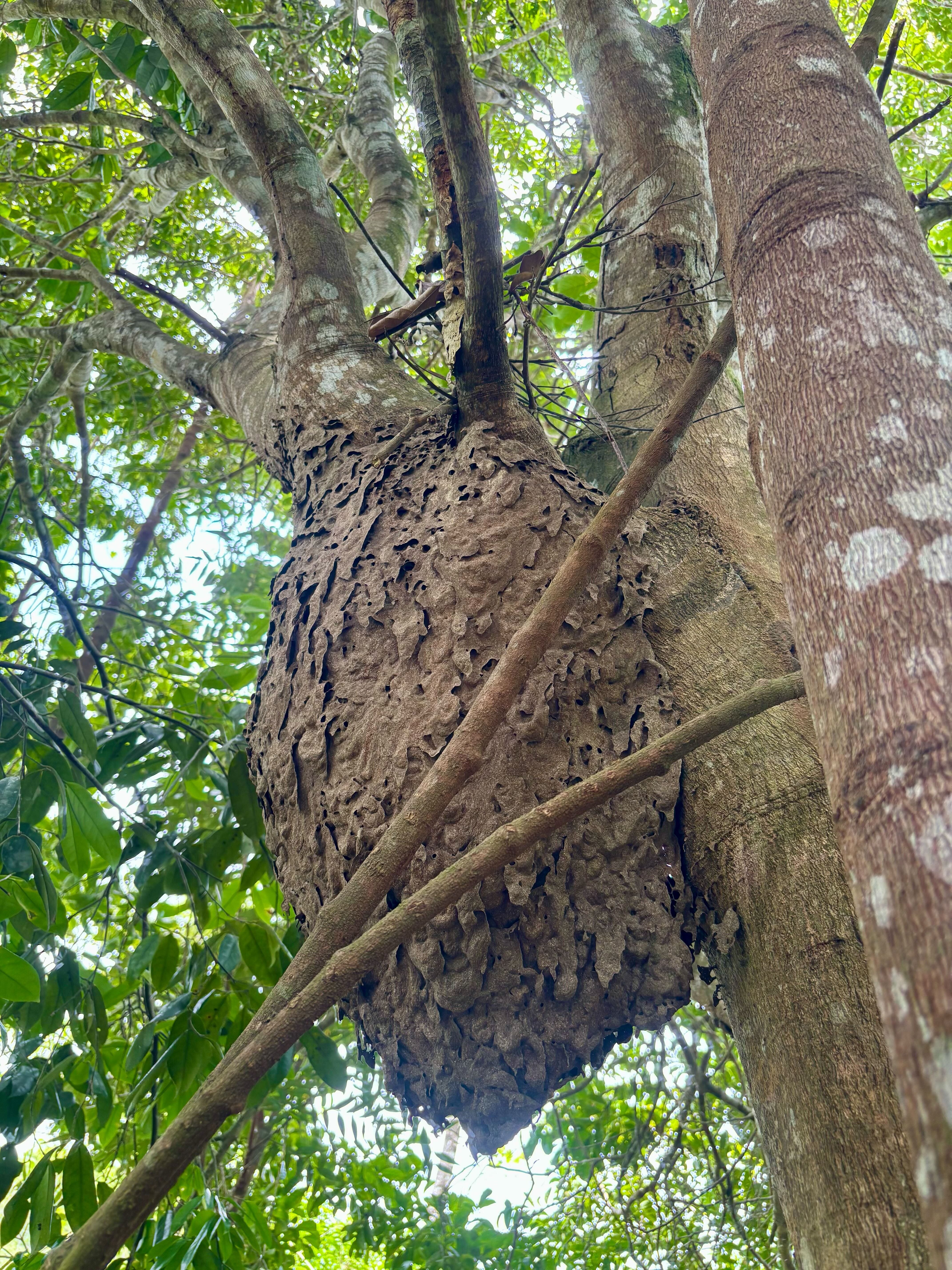
Spotted at our project in Bahia, this is a caçarema nest (Azteca chartifex) an arboreal ant very common in southern Bahia that builds massive nests on tree trunks. And yes, these ants like to live high up! The caçarema is essential for the forest. It helps maintain ecosystem balance by acting as a natural biological control, hunting pests that would otherwise damage the trees.
One last thing
Last month, we ran a small check-in with subscribers we hadn’t seen open the newsletter in a while. We got more replies than expected, and a lot of warmth in them. Daniela G., Robin, Thiago B., Felipe B. (who realized our emails had been going to the wrong folder for a year, and fixed it so he doesn’t miss anything anymore): thank you. It means a lot.
And to everyone else who’s been reading along for some or all of these five years: thank you.
🇧🇷 Do you want to receive our newsletter in Portuguese? No problem. CLICK HERE!